JUNE 28, 2024
How to Capture Memories Better Than Photos: Start Your Visual Diary Today!
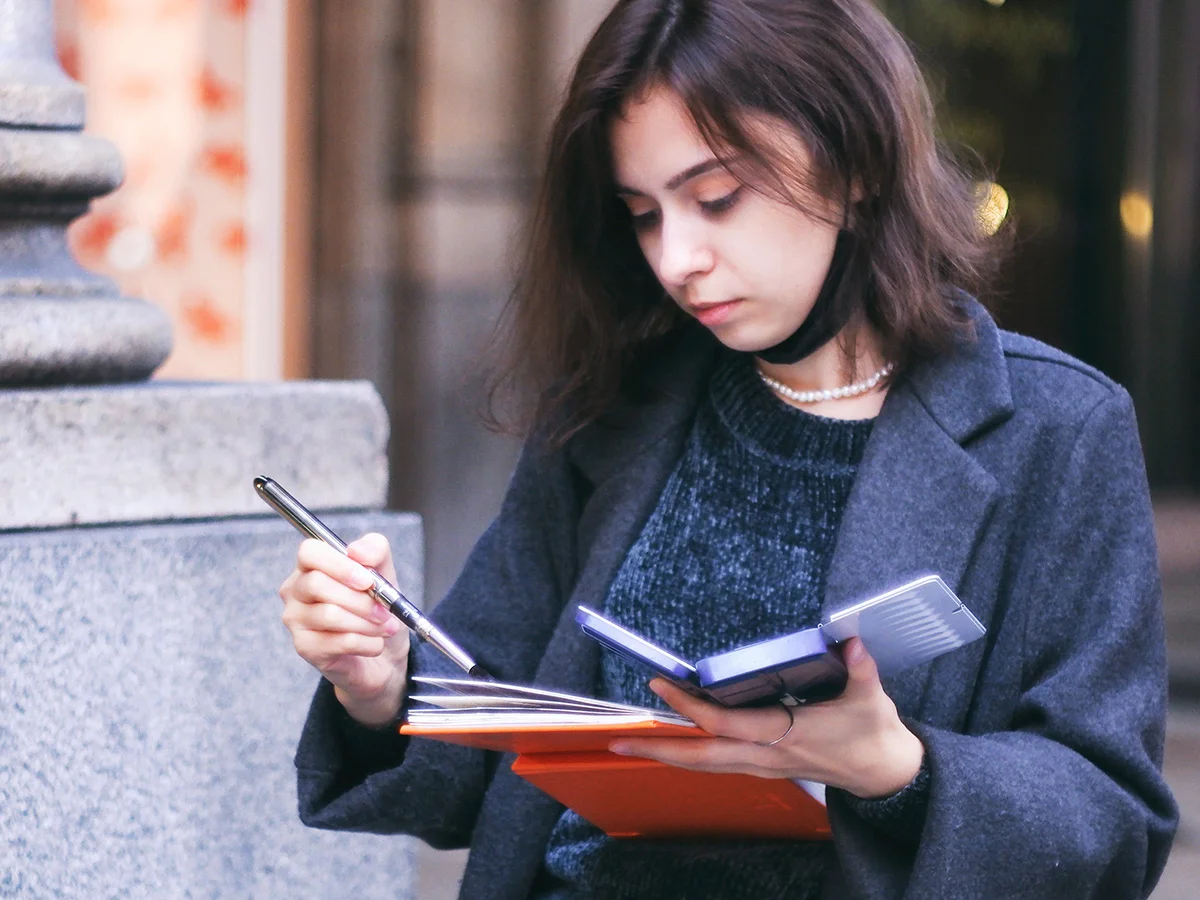
Have you ever noticed how drawings, even simple ones, can capture memories better than photos?
They not only capture the memory itself but also the feelings, emotions, sounds, and even smells associated with it. In this post, you will learn how a visual diary works and how to create one in your sketchbook!
Disclosure: I only recommend products I would use myself and all opinions expressed here are my own. This post may contain affiliate links. I may receive a small commission if you make a purchase using that link. Using these links will not include any additional costs to you. Read the full privacy policy here.
HOW DOES IT WORK?
Drawing engages multiple senses, such as sight, touch, hearing, and proprioception. This helps to strengthen the memory in the brain, ensuring its longevity.
THE PHOTO-TAKING-IMPAIRMENT EFFECT
Psychology professor Linda Henkel from Fairfield University studied how taking photos affects our memory and experience.
In the article, researchers took people on a tour of an art museum and asked them to observe some things and to photograph others. The results showed that taking photos of things as a whole made people remember fewer things and less about where they were in the museum. 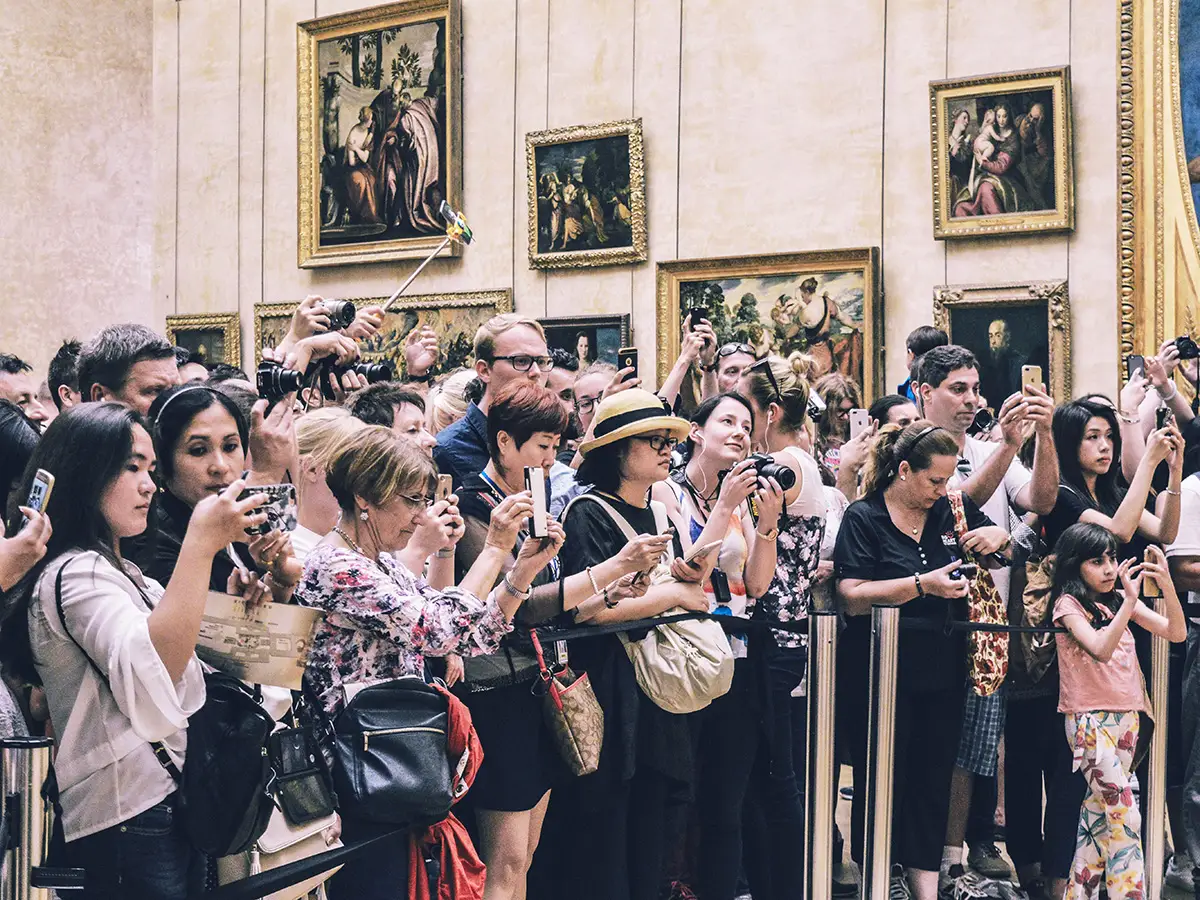
Photo by Alicia Steels
“When you take a photo of something, you’re counting on the camera to remember for you. You’re basically saying, ‘Okay, I don’t need to think about this any further. The camera’s captured the experience.”
— Linda Henkel, Psychology Professor
But when people zoomed in to take a picture of a particular part of the object, their memory wasn't affected and they could remember the details as well as if they had just looked at it. This is because zooming in helped them focus and pay more attention to the object, making it easier to remember. These results show the differences between human memory and the camera's "memory".
“This suggests that the additional attention and cognitive processes engaged by this focused activity can eliminate the photo-taking-impairment effect.” Henkel writes in the study.
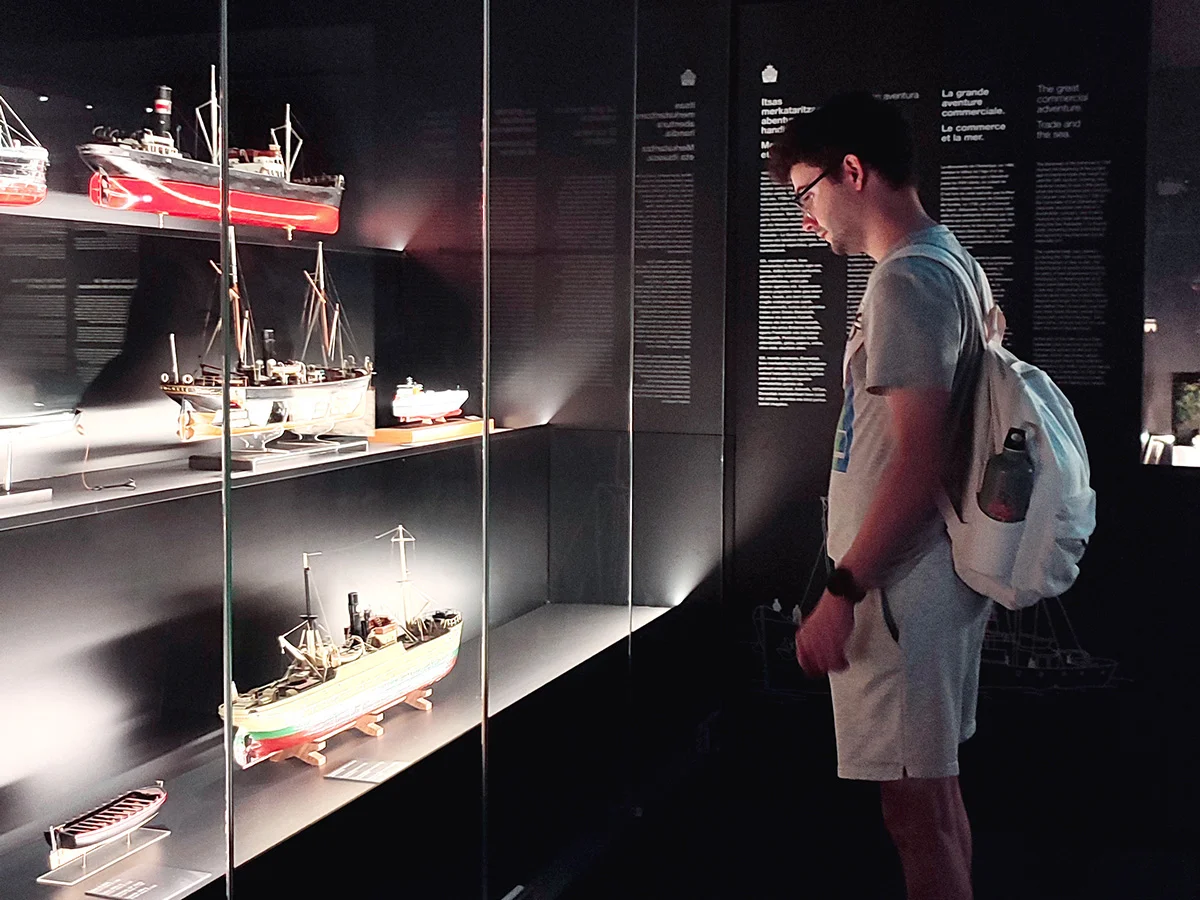
Drawing is like zooming in on a photograph, only better. If you look back at one of your old drawings, you will remember the period of your life when you created it. Imagine having a collection of such drawings in one place. This is where the concept of a visual diary comes in!
WHAT IS A VISUAL DIARY?
As there is no official definition of the term "visual diary", I would like to share my understanding of it.
Some people use it to document their thoughts and creative ideas, while others use it for artistic experiments. For me, a visual diary is a journal that mainly contains sketches of the moments from my life, sometimes accompanied by text or collage elements.
THEN WHAT'S THE DIFFERENCE BETWEEN A VISUAL DIARY AND A SKETCHBOOK?
It's easy - there is no difference.
A sketchbook is a book or a pad with blank pages for sketching and other creative work. Therefore sketchbooks can be used for anything: for practice, ugly sketches, nice and finished drawings, art challenges, art supply swatches, and much more. As you probably already guessed, it can also be used as a visual diary.
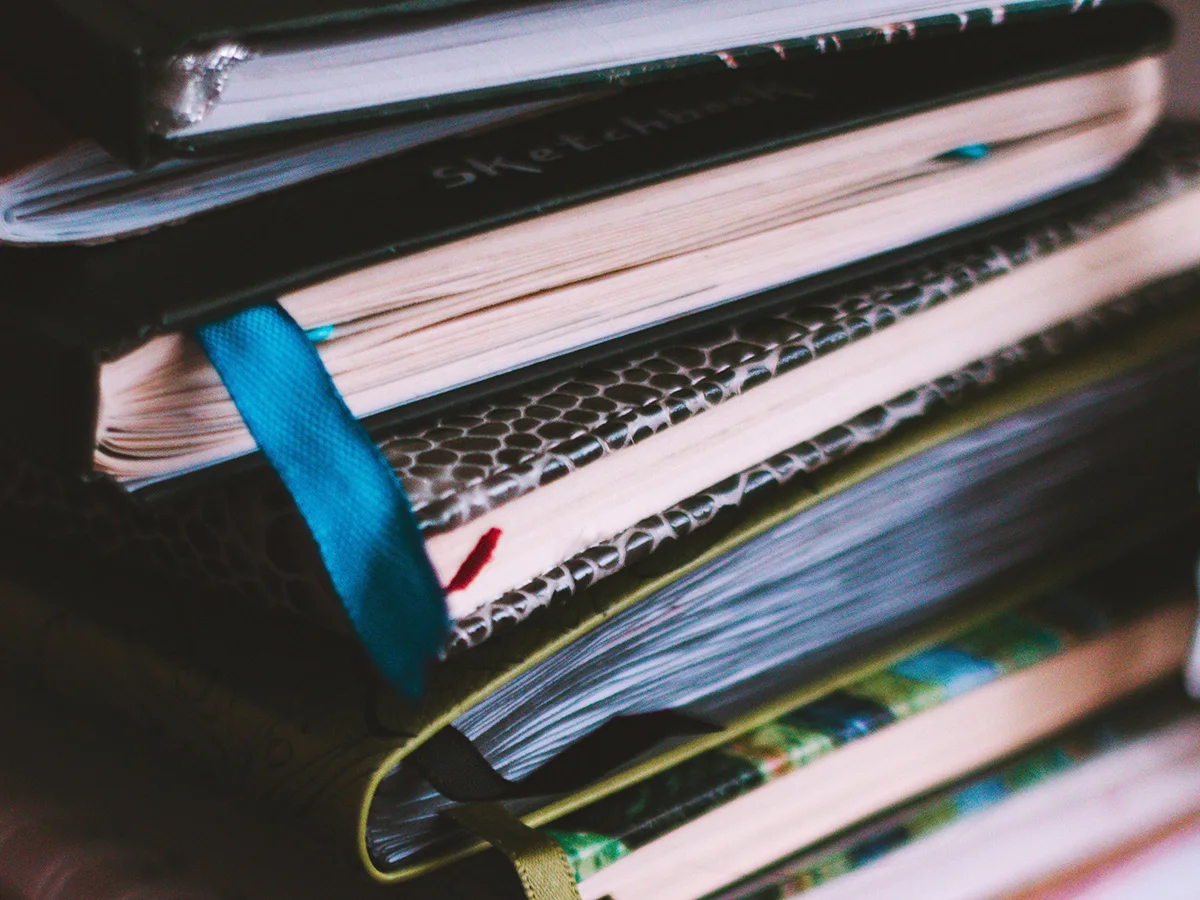
Photo by Pure Julia
HOW DO I START A VISUAL DIARY?
YOU WILL NEED ART MATERIALS
The first step in starting a visual diary is to choose your art materials. You will need a sketchbook and some drawing supplies like paints, markers, pens, collage materials, etc.
When it comes to choosing the drawing supplies, don't worry about any strict rules. The most important thing is to pick something that you enjoy working with. So go ahead and choose what you like!
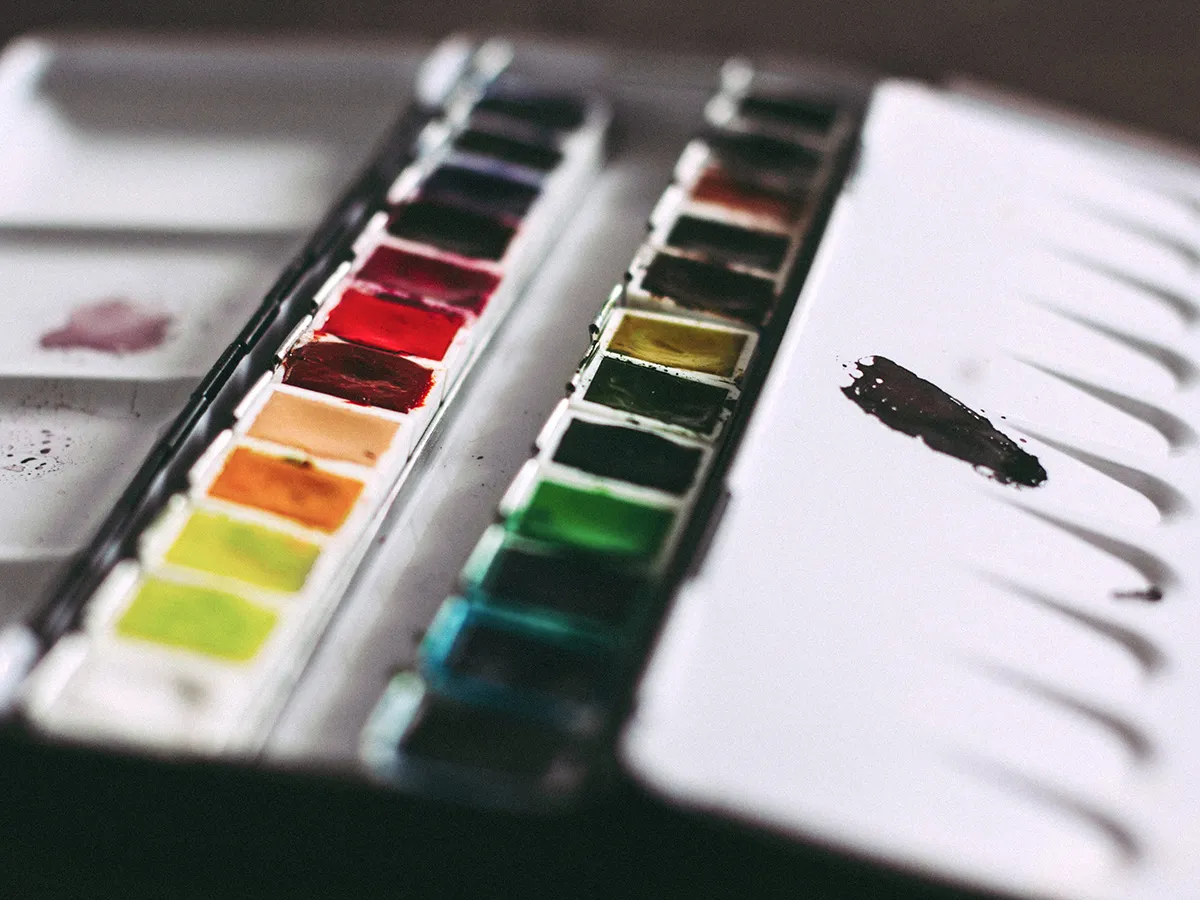
Photo by Kira Auf Der Heide
Choosing a sketchbook is the most exciting and crucial part of creating a visual diary. With so many options available on the market, it can be overwhelming to decide which one to pick. To make the process easier, here are some questions that you can ask yourself:
- What media do you want to use in it? Do you want to work with dry media such as pencil or charcoal, or do you prefer ink or water-soluble paints like watercolor? This will help you determine the type of paper that will work best for your needs.
- Do you want your sketchbook to have 100% cotton or pulp paper? Cotton paper is generally considered to be of higher quality and is more durable, while pulp paper is more affordable and suitable for everyday use.
- What sketchbook size are you comfortable with? A larger sketchbook can be great for creating detailed drawings, while a smaller sketchbook can be more portable and easier to carry around.
- What format do you prefer? Do you want a portrait, landscape, square, or panoramic format? This will depend on your personal preferences and the type of subjects that you plan to draw.
- Do you prefer hard or soft-cover sketchbooks? A hardcover sketchbook offers more support and protection for your pages, while a soft-cover sketchbook is more flexible and easier to carry around.
My personal favorite is a Strathmore Mixed Media sketchbook with a hardcover. It works well with a variety of drawing materials, from pencils to watercolors, and is reasonably priced.
FIND WHAT INSPIRES YOU
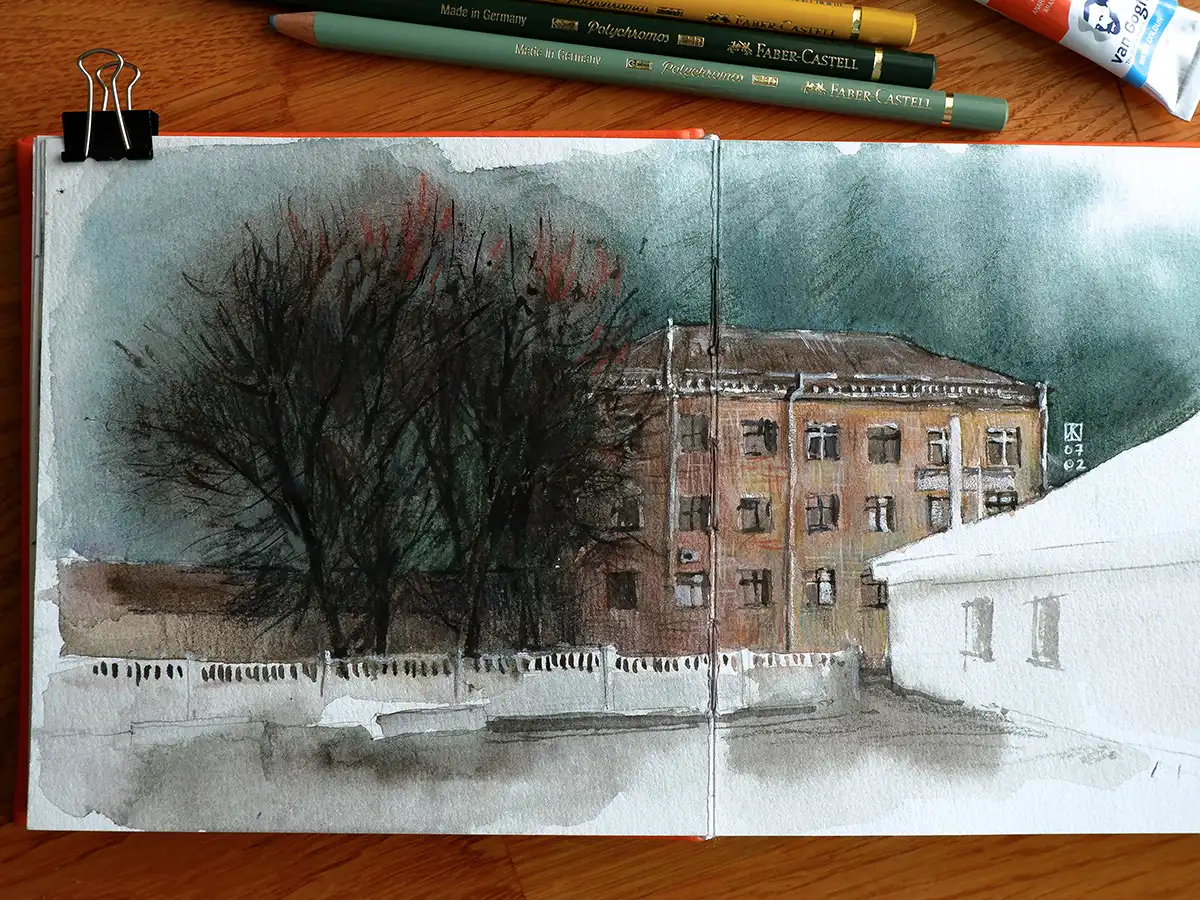
Once you have your materials, it's time to start filling your visual diary with art. There's no right or wrong way to do this - the most important thing is to have fun and experiment!
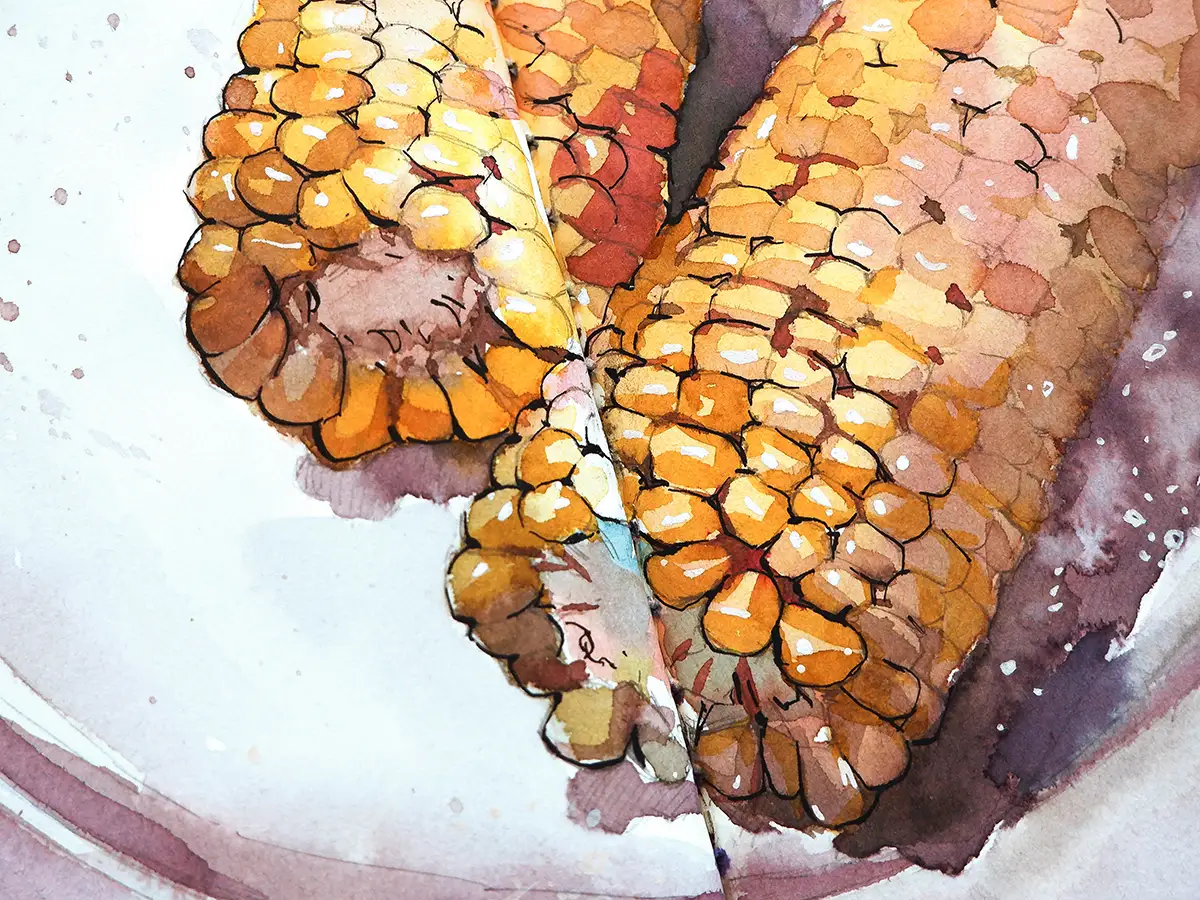
I find my inspiration in my surroundings, whether it's a gloomy urban scene or a plate of cooked corn. I try to make something special out of something ordinary.
One rule that I've set for myself when it comes to my visual diary is to never use photos taken by someone else. This includes images found on Pinterest or other websites. Don't get me wrong, there's nothing bad in using these as references - in fact, they can be a great source of inspiration! But for me, part of the joy of creating a visual diary is capturing my own memories and experiences through my art. If I use photos taken by someone else, I feel like I'm missing out on that personal connection.
TIPS ON KEEPING A VISUAL DIARY
As artists, we have the opportunity to learn and grow together. This is why I always appreciate it when artists share their knowledge. I've filled four sketchbooks and learned a lot along the way, so I would like to share some tips with you:
- Be consistent: Make drawing in your visual diary a habit. You don't have to work on it daily. It could be every other day, or on a schedule that fits your lifestyle. And remember - take a break if you need to.
- Draw from life: Carry your sketchbook with you and sketch from life whenever you can. Drawing on location helps you remember the moment even better than drawing from a photo.
- Keep it accessible: Make sure your visual diary is always within reach - whether it's on your desk or in your bag.
- Fill it with memorable items: Stick in photographs, dried flowers or leaves, tickets, candy wrappers, and notes from friends or loved ones. I even glued an empty salt wrapper into one of my pages once.
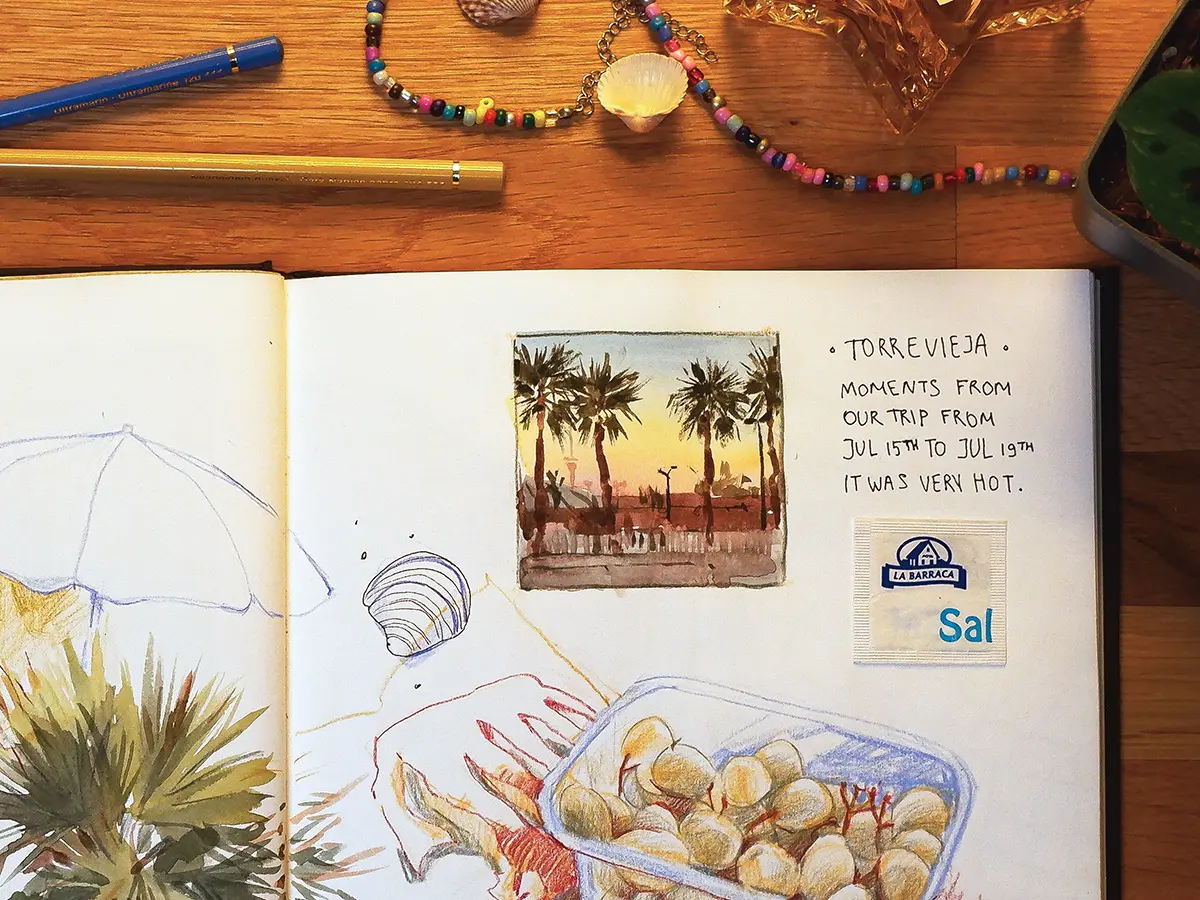
- Don't be afraid to add text: Write notes alongside your sketches, as they will add depth to your visual diary. Write about your thoughts, feelings, or the context behind your drawings. For example, artist Lilstarnerd from Florida, USA sometimes writes any words or phrases that come to her mind as she draws.
- Use of space: Play with the layout of your pages - don't be afraid to cross the central line of your sketchbook, or leave empty spaces. Sometimes, "empty" space can be just as powerful as filled space.
- No judgment: Remember that your sketchbook is a safe space for experimentation. Not every page you draw has to be a masterpiece.
THE STORY BEHIND MY SKETCHBOOK OF MEMORIES
In 2020, I began planning to move to Spain. So, I came up with a small personal project to document the everyday moments of my life in Ukraine - my home country. I started a visual diary in my sketchbook, drawing everything that caught my attention - from small, everyday moments to more meaningful ones. Every drawing in my sketchbook has a story behind it, and flipping through it now feels like traveling back in time.
It took me a year to complete my visual diary, and I'm happy with how it turned out. Now, I'm excited to share my journey with you and invite you on a short tour through some of the pages of my sketchbook of memories.
HOME
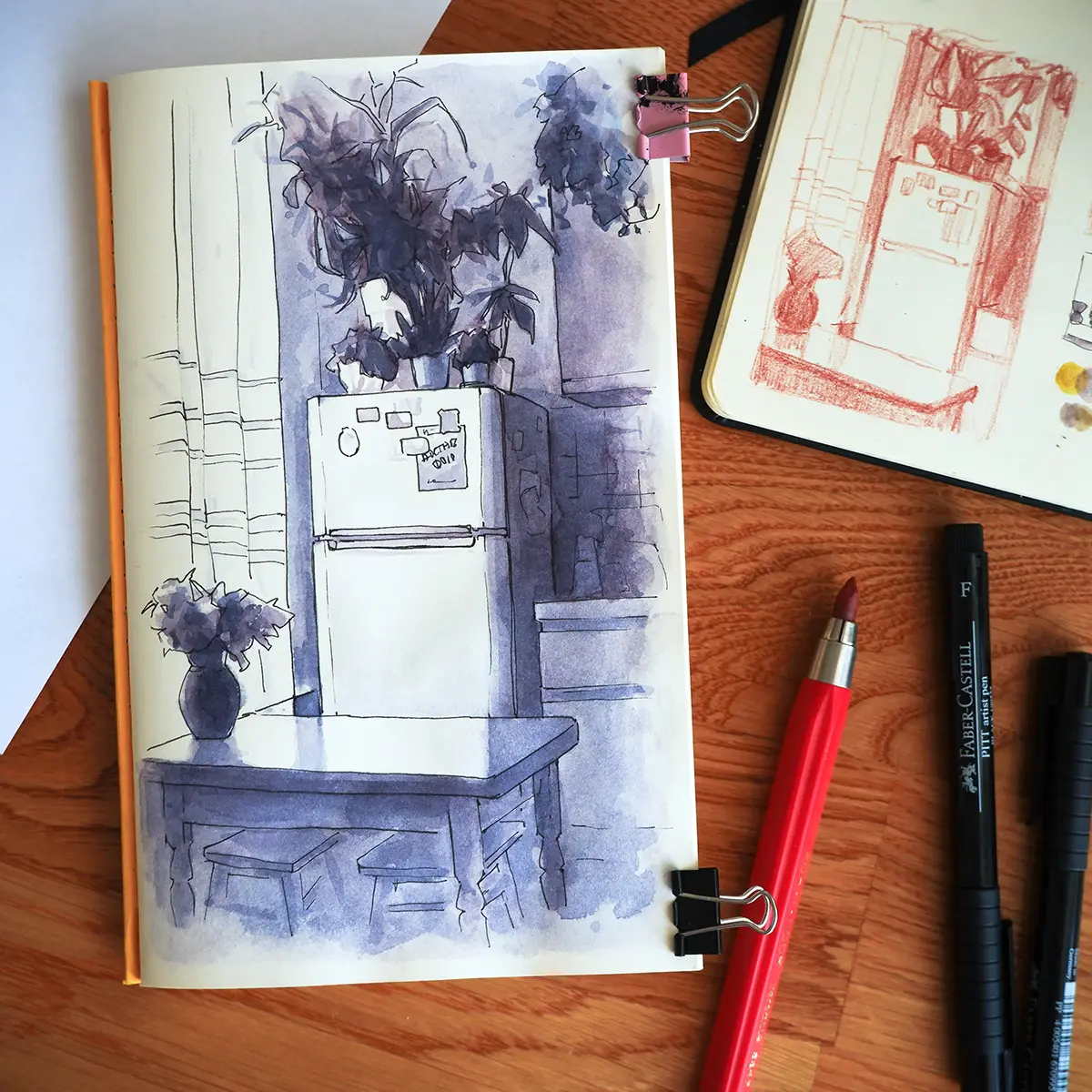
A corner of my kitchen illuminated by daylight. The focal point of the sketch is a wooden table. I can still remember the countless times I gathered around this table with my family and friends to enjoy a cup of tea or a meal. I also used this table to photograph my artwork and to cut paper. I even made my first handmade sketchbook on it.
LOCKDOWN SUSHI
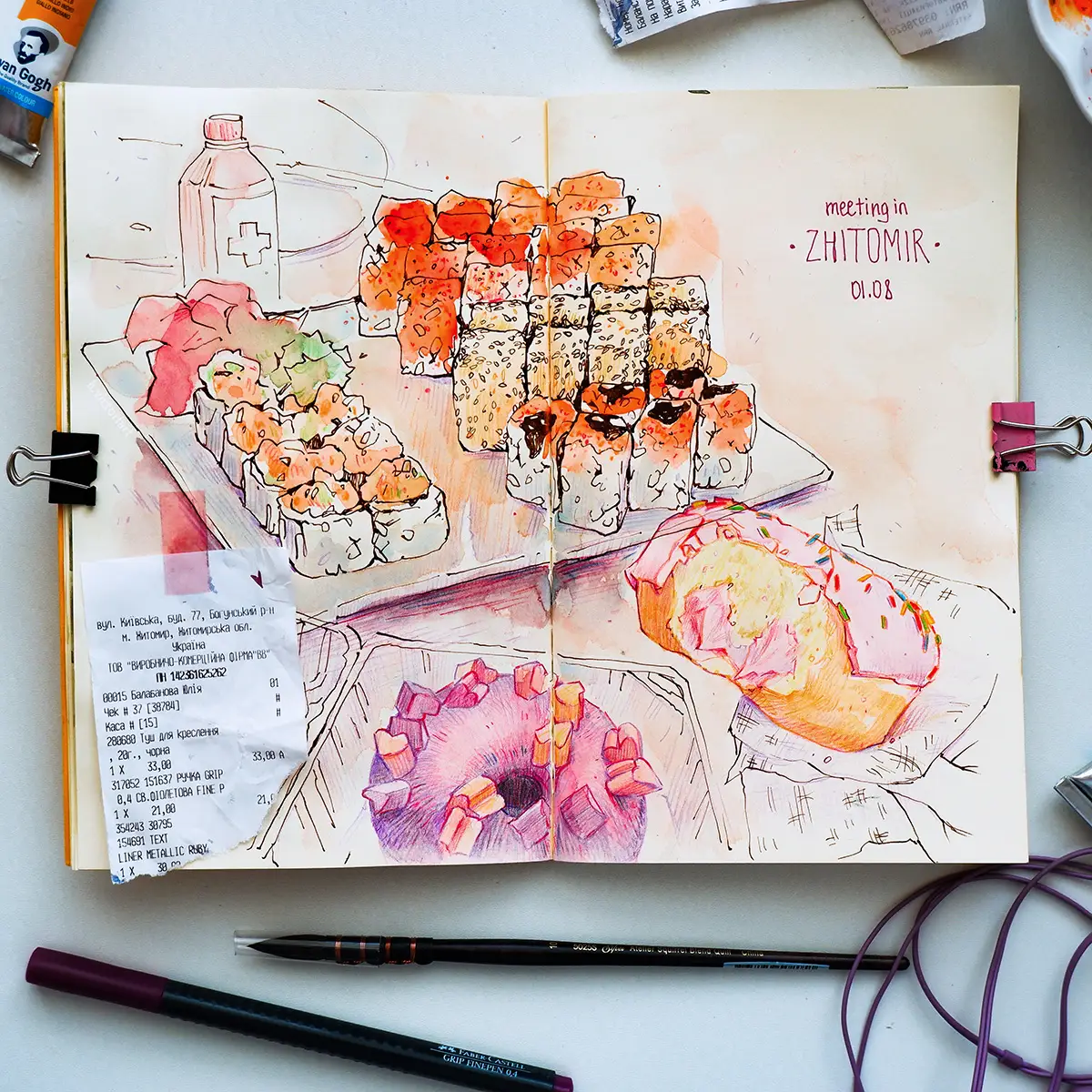
This is a good example of a sketch that didn't turn out the way I expected, but it has a special place in my artistic journey. It marks the beginning of my experiments with mixing colored pencils and watercolors - the technique I use a lot these days. This sketch reminds me of the time when I was having lunch with two of my artist friends during the lockdown times. In the background, you can see a small bottle of alcohol that I used to carry with me to disinfect my hands.
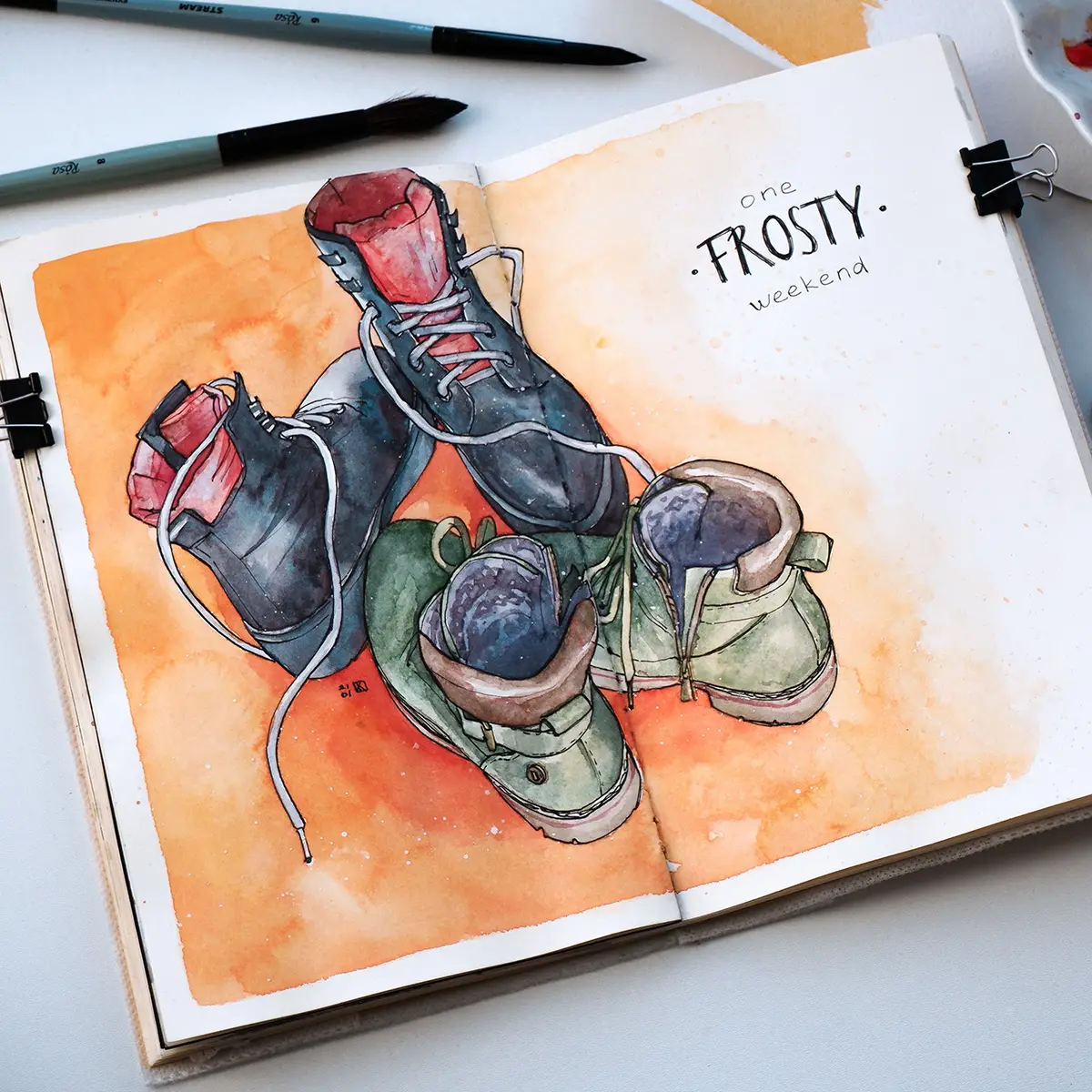
ONE FROSTY WEEKEND
Two pairs of shoes that belonged to me and my friend. This sketch reminds me of the time when she came to visit me in winter. The weather was cold and snowy, but we still had a great time together. The orange background I added is especially fitting because it reminds me of the warm light filling a room at sunset.
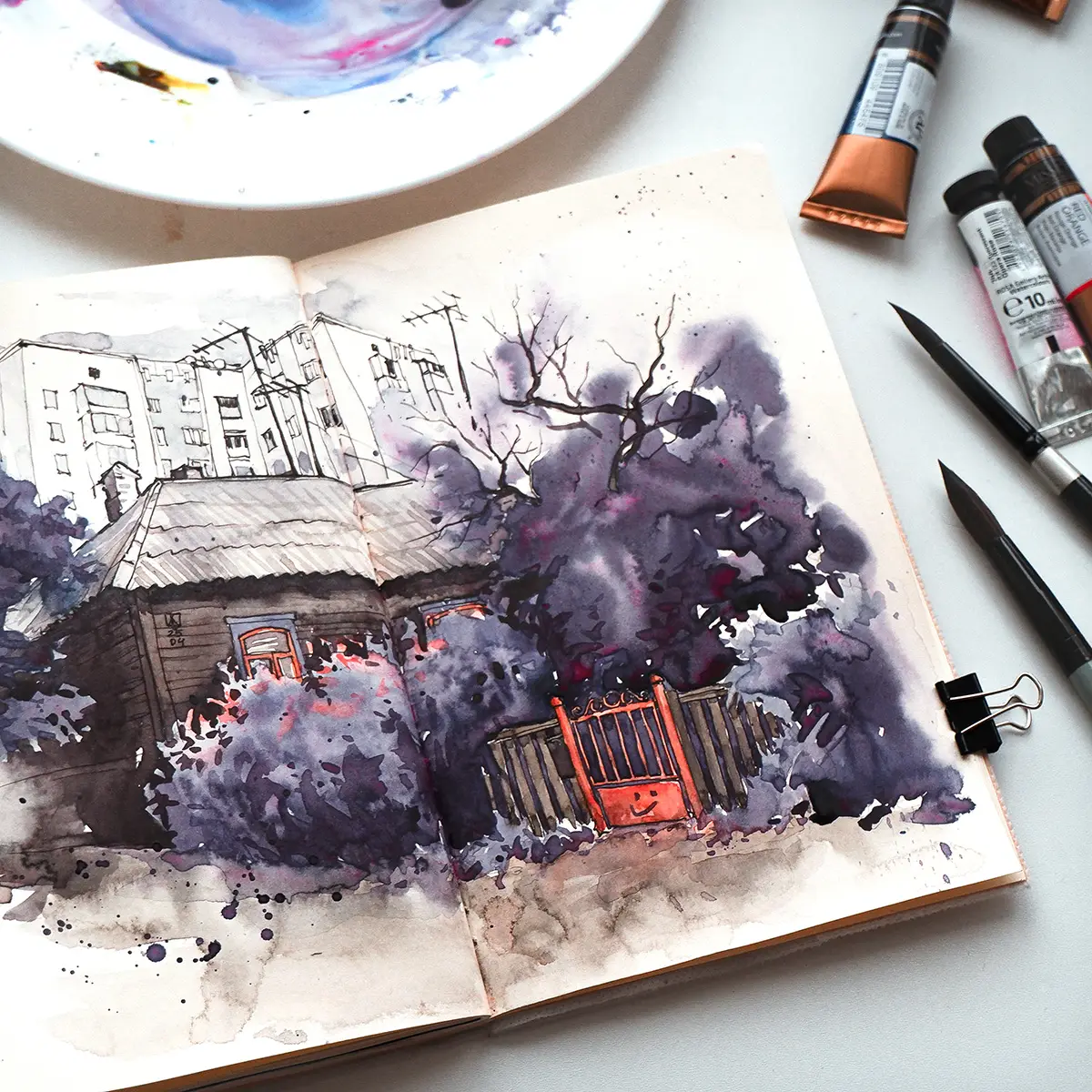
FRIENDLY FACE
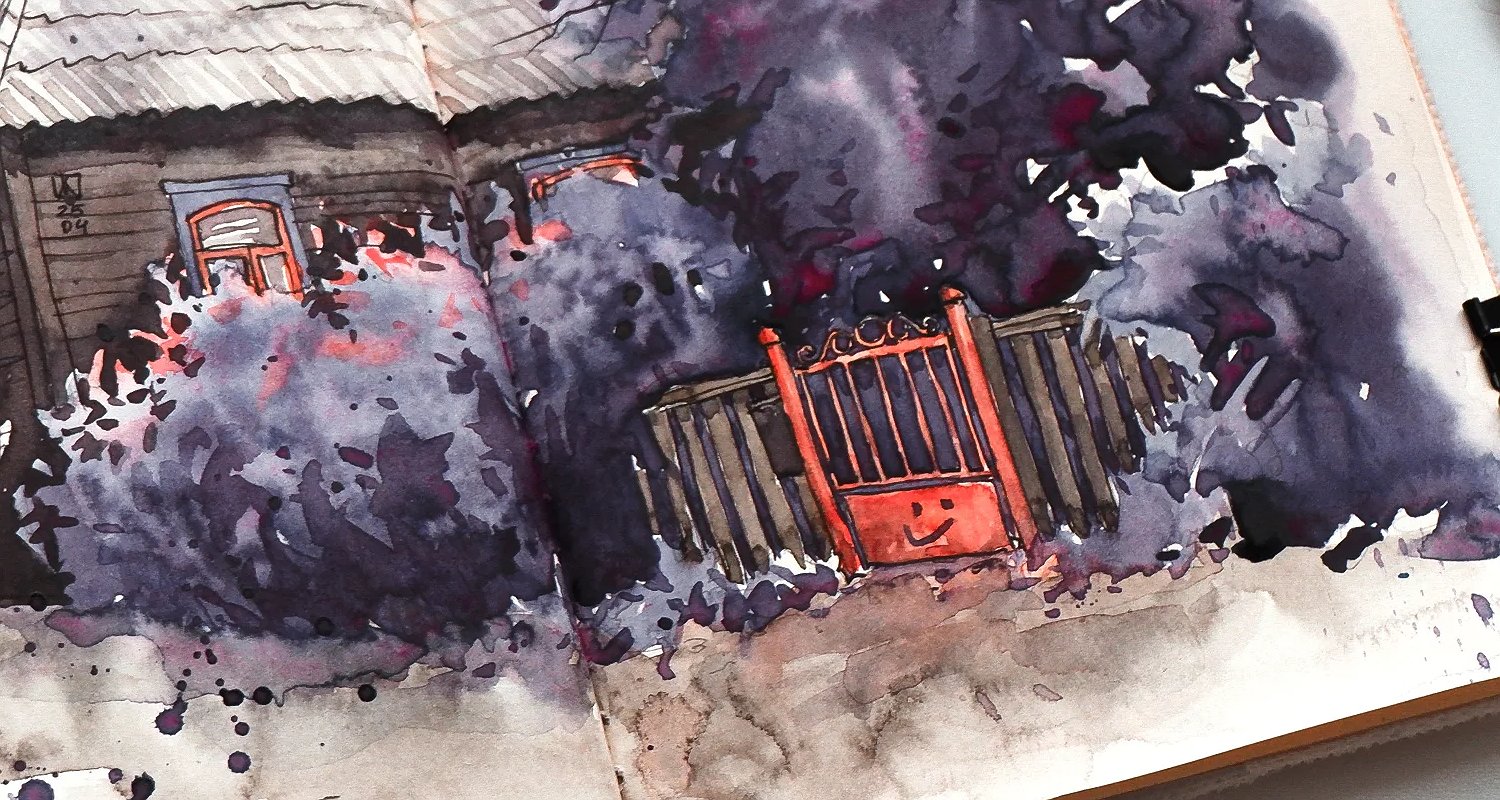
I used to see this friendly gate out of a bus window almost every day on my way home from art school. I painted this sketch and won Lena Sen's "One Breath Challenge" on Instagram. I changed the original colors of the reference to purple because I was inspired by Lomography's LomoChrome Purple film.
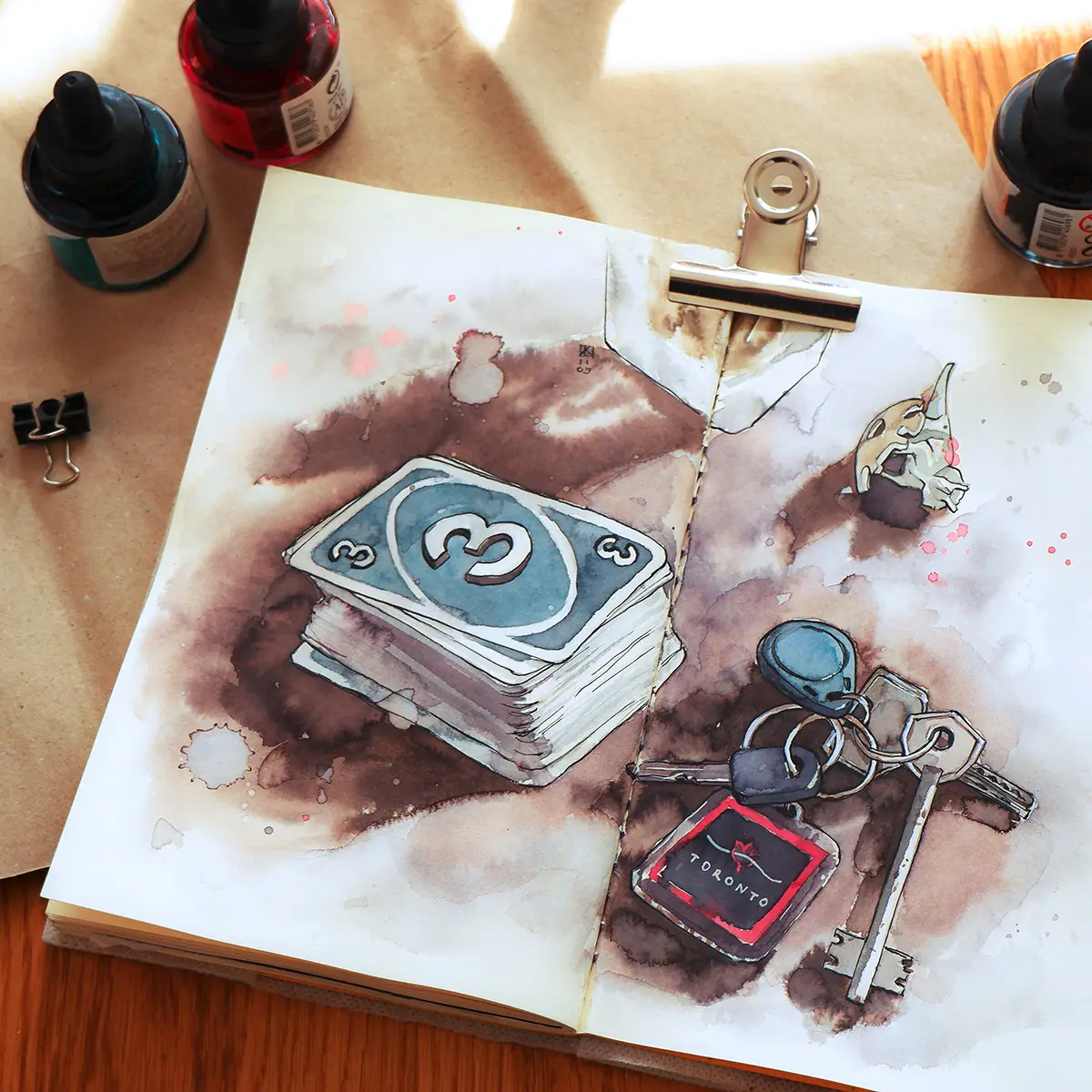
CARDS TIME
This is the last sketch in my visual diary, and it shows the keys to the apartment I was renting and a deck of Uno cards. I taught my nephew how to play Uno, and since then, every time I've visited my sister, he's asked me to play with him. In the background of the sketch, you can also see a dinosaur figurine that my nephew got from a Kinder Surprise.
Check out my YouTube video if you want to hear more stories from my Sketchbook of Memories:
FINAL WORDS
I hope this post has been useful and that you now know what you need to start your own visual diary. As someone who has been keeping visual diaries for years, I highly recommend that you try it for yourself. Your sketches not only capture the world around you but also your emotions and feelings at that moment.
Even if you are a beginner, don't worry about making mistakes or not being good enough, because the more you practice, the more confident you will become. Trust me, it's worth it!
You can always share pages from your own visual diary with me by reaching out or tagging me on Instagram. I would love to see how you use my tips to interpret the world through your artwork.
Thank you for taking the time to read this post. I hope it has sparked your creativity and inspired you to create something amazing! So, keep exploring the possibilities of a visual diary, and always remember to enjoy the journey and have fun!
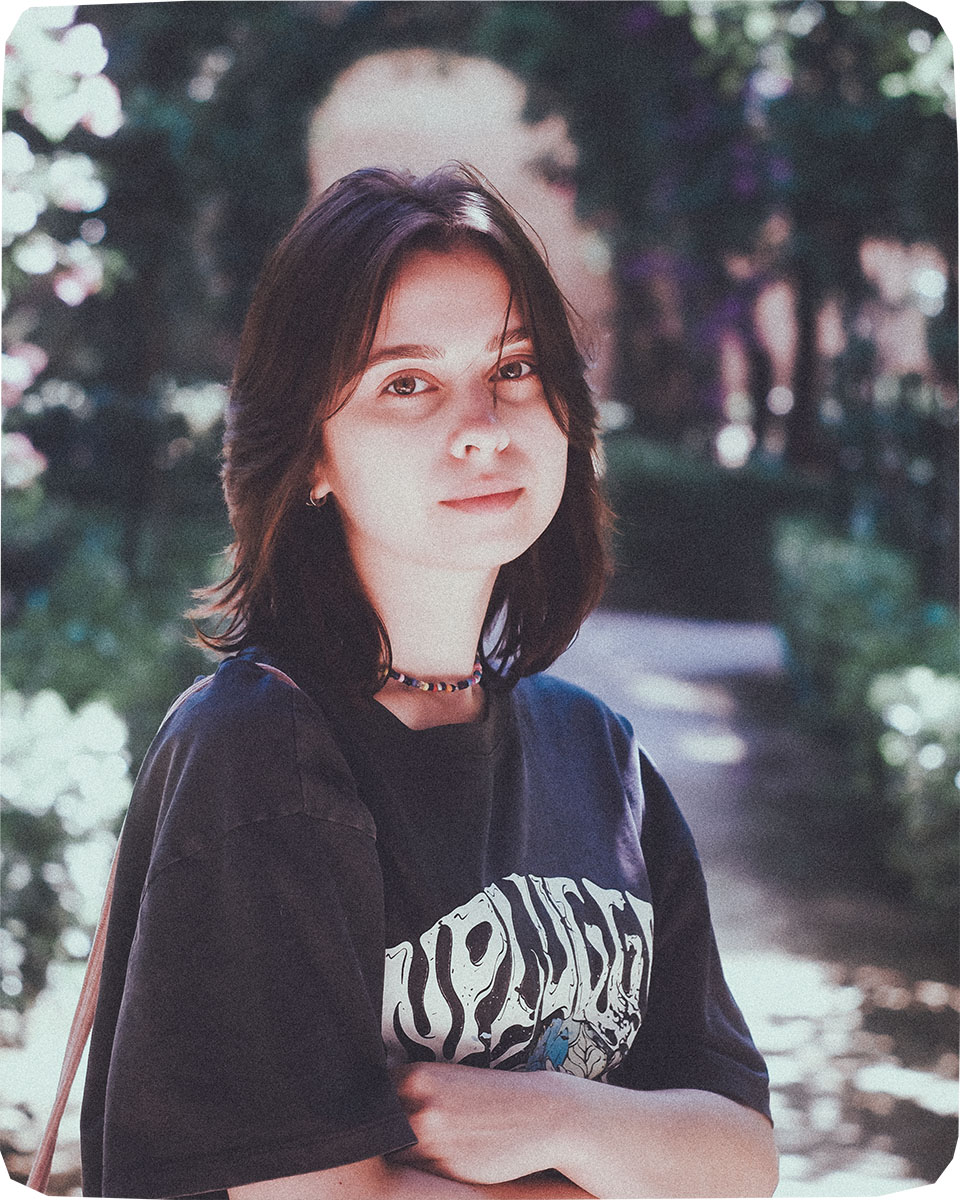
ABOUT THE AUTHOR
Viktoria is a professional watercolor artist with a Fine Arts degree in Painting and Art Pedagogy. In her works, she combines watercolor and colored pencils, focusing on plants, mushrooms, and animals.